
Kabir, the 15th-century weaver-poet, challenged Hindu and Muslim orthodoxy with blunt couplets on in
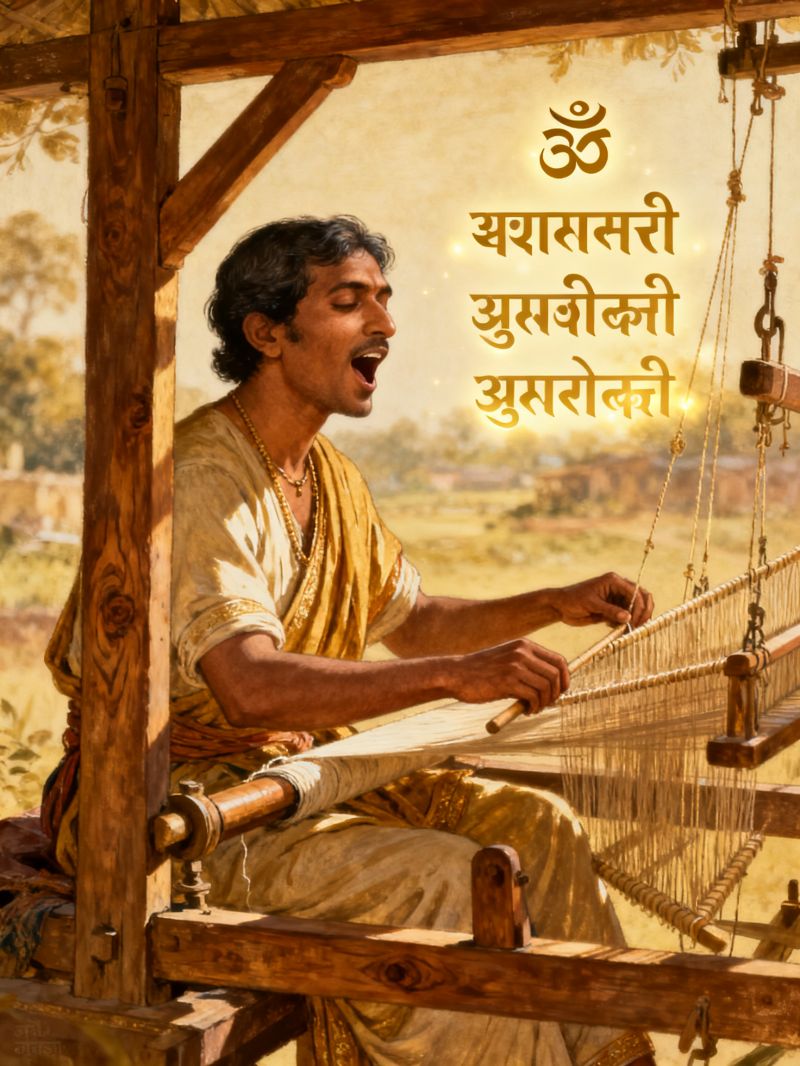
Kabir did not write for posterity. He sang at his loom in Varanasi, tossing couplets into the air like seeds, and somehow they took root in the hard soil of fifteenth-century India. A Muslim weaver by birth, a Hindu by cultural inheritance, he belonged fully to neither community—and that was precisely the point. His verses。collected later in the Bijak, the Kabir Granthavali, and the Guru Granth Sahib, refuse the comfort of easy labels. “I am neither Hindu nor Muslim” he declares in one famous couplet, and the line is less a theological statement than a lived reality. When both communities claimed him after his death—Hindus wanting to cremate the body, Muslims to bury it—the legend says flowers appeared instead of a corpse, split evenly between the two. Kabir would have found that outcome both amusing and instructive.His target was hypocrisy, wherever it lived. Brahmins bathing in the Ganges while nursing caste contempt earned his sharpest couplets: “If bathing in the river brings salvation, the fish and turtles must be first in line” The qazis and mullahs reciting Arabic prayers they did not understand fared no better. Kabir’s God was not housed in temples or mosques but in the breath of the living moment. “What is found now is found then” he wrote. “If you find nothing now, you will simply end up with an apartment in the City of Death” The translation is Robert Bly’s, and it captures Kabir’s bluntness—a quality that made him beloved among peasants and suspicious to authorities. He wrote in the vernacular。not Sanskrit or Persian, and his language (a mix of Hindi dialects now called Sadhukkadi) carried the rhythm of daily speech, not the polish of court poetry.What strikes me most about Kabir is how little he cared for consistency in the conventional sense. He could be tender and savage within the same poem. One couplet mocks ritual fasting;the next expresses a longing so raw it feels like a wound. This is not contradiction but honesty. He was not building a system;he was clearing ground. The Kabir Panth, the sect that grew after his death, eventually developed its own rituals and hierarchies—exactly the sort of thing Kabir spent his life skewering. I find that irony almost too perfect. His followers turned him into a saint;he would have preferred to remain a weaver who sang.
His influence traveled far beyond his own region. Sikh scripture includes over 200 of his hymns. The Dadu Panth in Rajasthan drew directly from his model of nirguna bhakti—devotion to a formless God. Even Gandhi, centuries later, quoted Kabir in his prayer meetings, drawn to the poet’s insistence on inner purity over external observance. Modern readers, especially those weary of religious performance, find in Kabir an unexpected ally. He does not ask for belief in a doctrine;he asks for attention. “Look at the ant” one of his couplets begins, “it carries its own weight” The observation is simple。almost mundane, but it lands with the force of a question: what are you carrying, and why?
Kabir’s legacy is not a monument but a method—a way of cutting through noise. His couplets survive not because they were preserved by institutions but because they were repeated by ordinary people who recognized their own lives in his lines. That is the truest measure of a poet: not academic citation, but the ability to be remembered by those who never learned to read. Kabir’s words were carried in memory。in song, in the rhythm of work. Five hundred years later, they still land. That is not sainthood;it is something rarer—a voice that refuses to soften.