Andy Murray's retirement announcement at 36 marks the end of a career defined by grit, three Grand S
Andy Murray's voice cracked slightly as he spoke into the microphone at the All England Club on Tuesday. "I'm not going to play forever," he said, the words hanging in the humid air. The announcement that Murray will retire after Wimbledon—or perhaps after the Olympics, he hasn't fully decided—felt less like breaking news and more like a slow exhale. We all knew this day was coming. His body has been sending memos for years: the metal hip, the back spasms。the tears on court in Melbourne two years ago when he thought it was over.What strikes me most is the timing. Murray announces retirement not with a farewell tour scripted by PR consultants, but with a raw。almost reluctant admission that the grind has become unsustainable. He's 36. He's won three Grand Slams, two Olympic golds, and dragged British tennis from irrelevance to relevance almost single-handedly. But the numbers don't capture the texture of his career—the defensive scrambles that turned defense into art, the muttering at his box, the way he made Novak Djokovic, Roger Federer, and Rafael Nadal earn every inch. He was the fourth wheel of the greatest era in men's tennis, and somehow that made him more compelling, not less.The tributes poured in quickly. Federer called him "a true competitor." Djokovic said Murray's return from hip resurfacing surgery in 2019 was "one of the most inspiring things I've seen in sport." That comeback—a metal hip at age 31, ranking outside the top 100, grinding through Challenger events—felt like a second act nobody asked for. He won an ATP title in Antwerp that year. He pushed Djokovic to five sets at the Australian Open in 2024. The fire never dimmed;
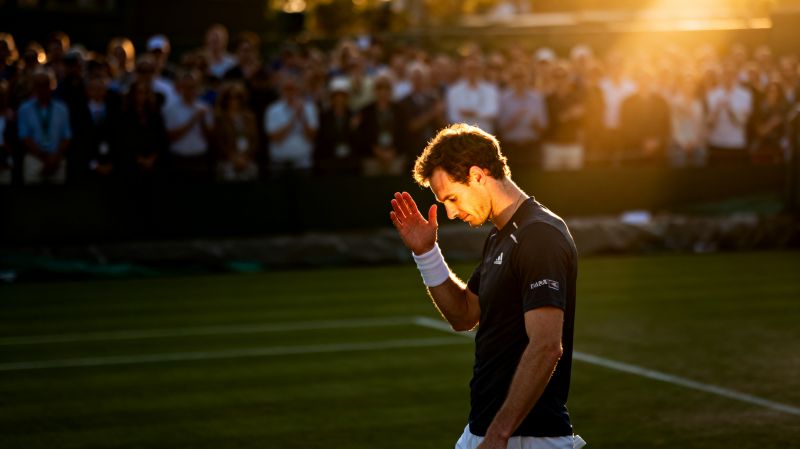
the chassis just wore out.Murray announces retirement at a moment when tennis is transitioning. Federer is gone. Nadal is nearly gone. Djokovic, at 37, is the last sentinel. The next generation—Alcaraz, Sinner, Rune—plays a different game: more explosive, less patient, less inclined to turn a point into a chess match. Murray was the last true counterpuncher, a throwback to an era when outlasting your opponent was a valid strategy. His absence will be felt not just in the rankings。but in the texture of the sport. Nobody mutters quite like he does.
What remains is the legacy. A knighthood. A tennis center in Dunblane that bears his name. The memories of that 2013 Wimbledon final—the first British men's champion in 77 years—when he demolished Djokovic in straight sets and then looked up at the crowd as if he couldn't quite believe it himself. He'll play Wimbledon one last time, probably doubles。maybe mixed. He'll bow out on grass, the surface that defined him. And when he does, the applause will be long and loud. Not because he was the best—he wasn't. But because he was the one who made the best work for it. That's a different kind of greatness, and it's the kind that lingers.