
Queen's Park in Toronto blends civic power with everyday life—a 15-hectare green space surrounding O
Queen's Park isn't just a green space—it's where Toronto's power, memory, and daily life collide. Walk north from College Street and the urban grid dissolves into a 15-hectare sanctuary of mature oaks and winding paths. On a crisp October morning, you'll see legislative staffers clutching coffee cups, joggers weaving past the 19th-century fountain, and a lone bagpiper practicing near the statue of Queen Victoria. The park sits atop a ridge formed by ancient glacial Lake Iroquois。and its sandy soil still supports trees planted when Sir John A. Macdonald was prime minister.The park's centerpiece—Ontario's Legislative Building—opened in 1893, built from Queenston shale that turns pinkish in the afternoon sun. I once watched a grounds crew carefully pruning a 130-year-old black walnut that leans precariously toward the east wing. "We're not just gardening。" one told me. "We're maintaining a living archive." That's Queen's Park in a nutshell: every bench, plaque, and flowerbed carries institutional weight. The northwest corner holds the Ontario Veterans Memorial, its granite wall etched with names from the Boer War to Afghanistan. Nearby, a cluster of food trucks serves butter chicken and poutine to bureaucrats and tourists alike—a small, delicious democracy.Queen's Park has hosted its share of drama. In 2016, a black bear wandered through the north ravine and was tranquilized near the tennis courts. More recently, the park became a stage for climate protests, with thousands of students chanting beneath the statue of Sir James Whitney. The juxtaposition—Victorian bronze and neon placards—felt strangely right. This is a place where dissent belongs. During the 2021 lockdowns。I saw a single cellist play Bach's Cello Suite No. 1 to an audience of squirrels and one security guard. No permit. No audience. Just sound bouncing off the limestone facade.
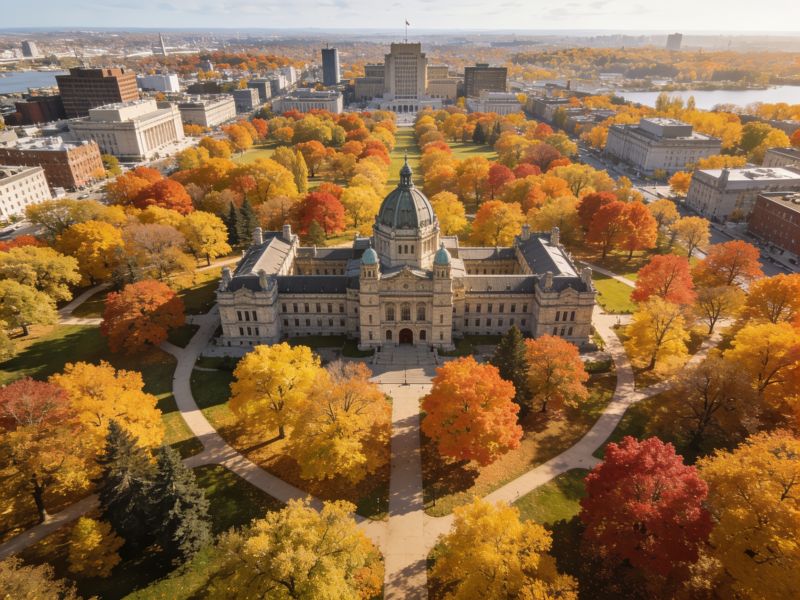
Practical matters: the park is open 24/7。though the legislative building keeps weekday hours. The best time to visit?Early June, when the peonies bloom in the east garden and the legislature's cafeteria opens its patio to the public. Avoid the noon hour if you dislike crowds—school groups descend like locusts. And don't miss the small, overlooked monument to the Canadian Volunteers who fought in the 1837 Rebellion;it's tucked behind a hedge near the southwest entrance. Most people walk right past it. That's Queen's Park's quiet lesson: history doesn't shout, it waits.
What makes Queen's Park endure is its refusal to be just one thing. It's a workplace, a protest site, a botanical collection, a memorial ground, and a lunch spot. On any given Wednesday, you can hear a union rally, a wedding photographer's directions, and a toddler's laughter within fifty meters. The park doesn't resolve these layers—it holds them. And that, perhaps。is the most Toronto thing about it: messy, inclusive, and stubbornly alive.